
Story

Yacuanquer is one of the most dynamic coffee producing municipalities in Nariño, Colombia. This coffee is especially unique given that it is part of the "Picker's Project" — a social program designed to improve outcomes in the cup by optimizing harvesting practices through the inclusion of farm-labor in the formal economy. This traditional washed coffee is fermented for 18-22 hours with a "rolling mucilage" approach to enhance sweetness.
Nestled in Colombia's Nariño region, the village of Yacuanquer is home to generations of coffee-growing families farming at elevations of 1,800–2,200 MASL beneath the misty Andes Mountains. The region's cool climate and volcanic soils produce coffees celebrated for their creamy body and vibrant red fruit sweetness.
Ripe cherries are handpicked before undergoing Colombia's traditional el beneficio process—depulping, fermenting for 18–22 hours, washing, and drying on patios and in parabolic dryers for 8–15 days—resulting in a clean, balanced, and expressive cup.
This coffee was produced through the Manos al Grano Foundation's Pickers Project, which formalizes employment for seasonal coffee pickers by providing fair wages, healthcare, legal benefits, and ongoing training, helping strengthen one of the most vital links in Colombia's coffee supply chain.
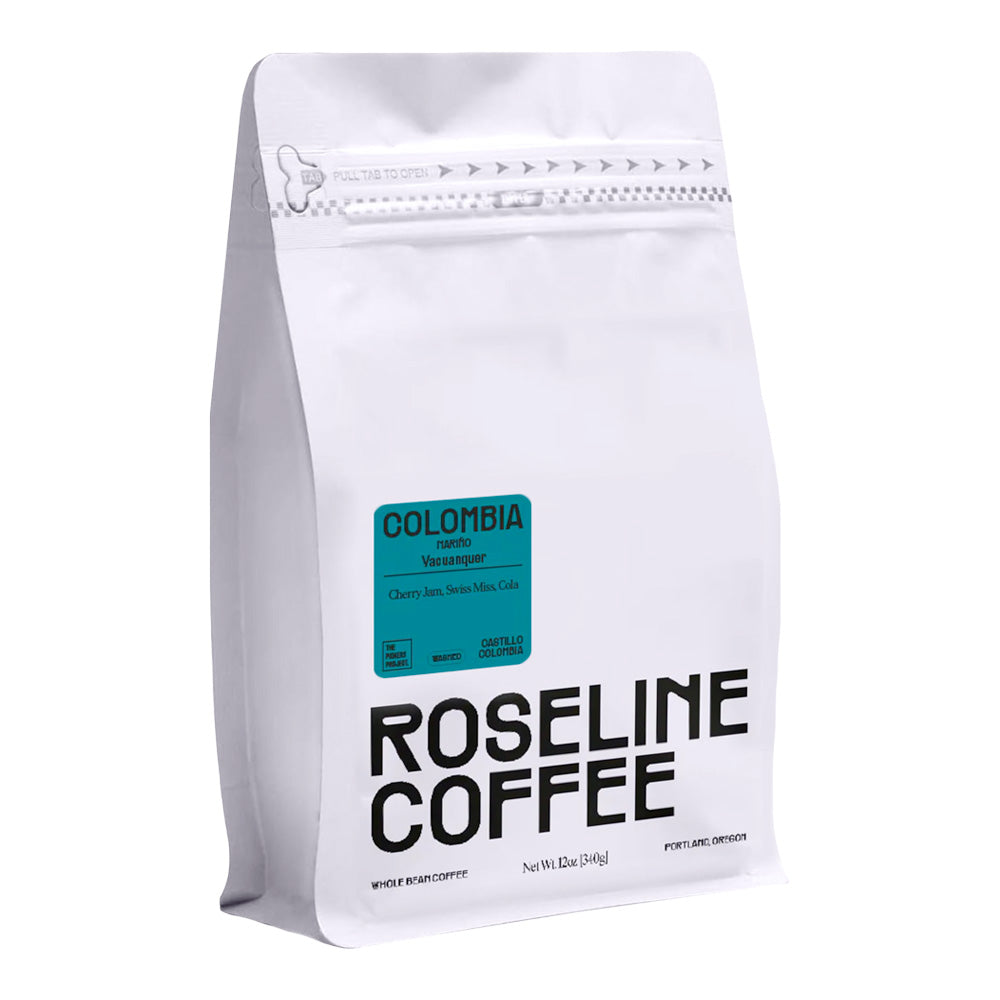
Colombia Yacuanquer
Colombia Yacuanquer
Couldn't load pickup availability
Characteristics
Medium
Creamy
Cherry Jam
Cherry Jam, Swiss Miss, Cola
Small Holder Farmers
1800 - 2200 Masl
Colombia, Castillo
Washed
Narino, Colombia
Story
Yacuanquer is one of the most dynamic coffee producing municipalities in Nariño, Colombia. This coffee is especially unique given that it is part of the "Picker's Project" — a social program designed to improve outcomes in the cup by optimizing harvesting practices through the inclusion of farm-labor in the formal economy. This traditional washed coffee is fermented for 18-22 hours with a "rolling mucilage" approach to enhance sweetness.
Nestled in Colombia's Nariño region, the village of Yacuanquer is home to generations of coffee-growing families farming at elevations of 1,800–2,200 MASL beneath the misty Andes Mountains. The region's cool climate and volcanic soils produce coffees celebrated for their creamy body and vibrant red fruit sweetness.
Ripe cherries are handpicked before undergoing Colombia's traditional el beneficio process—depulping, fermenting for 18–22 hours, washing, and drying on patios and in parabolic dryers for 8–15 days—resulting in a clean, balanced, and expressive cup.
This coffee was produced through the Manos al Grano Foundation's Pickers Project, which formalizes employment for seasonal coffee pickers by providing fair wages, healthcare, legal benefits, and ongoing training, helping strengthen one of the most vital links in Colombia's coffee supply chain.