
Story

This coffee originates from the Halo Beriti Washing Station in the renowned Yirgacheffe region of Ethiopia. Approximately 750 smallholder farmers deliver their coffee cherries to this station. Notably, this particular batch undergoes a meticulous “special preparation” involving repeated hand sorting during the receiving and drying processes. Moreover, farmers in this region lack access to fertilizers and pesticides, resulting in a unique coffee production method.
Although this coffee cannot be precisely traced to a single variety, it is composed of native heirloom varieties exclusively cultivated in Ethiopia. High-elevation coffees like this one are renowned for their exceptional quality. The cooler temperatures at higher elevations slow down the growth rate, allowing the plant to concentrate on bean production. Consequently, the beans develop more sugars, leading to deeper and more complex flavor profiles.
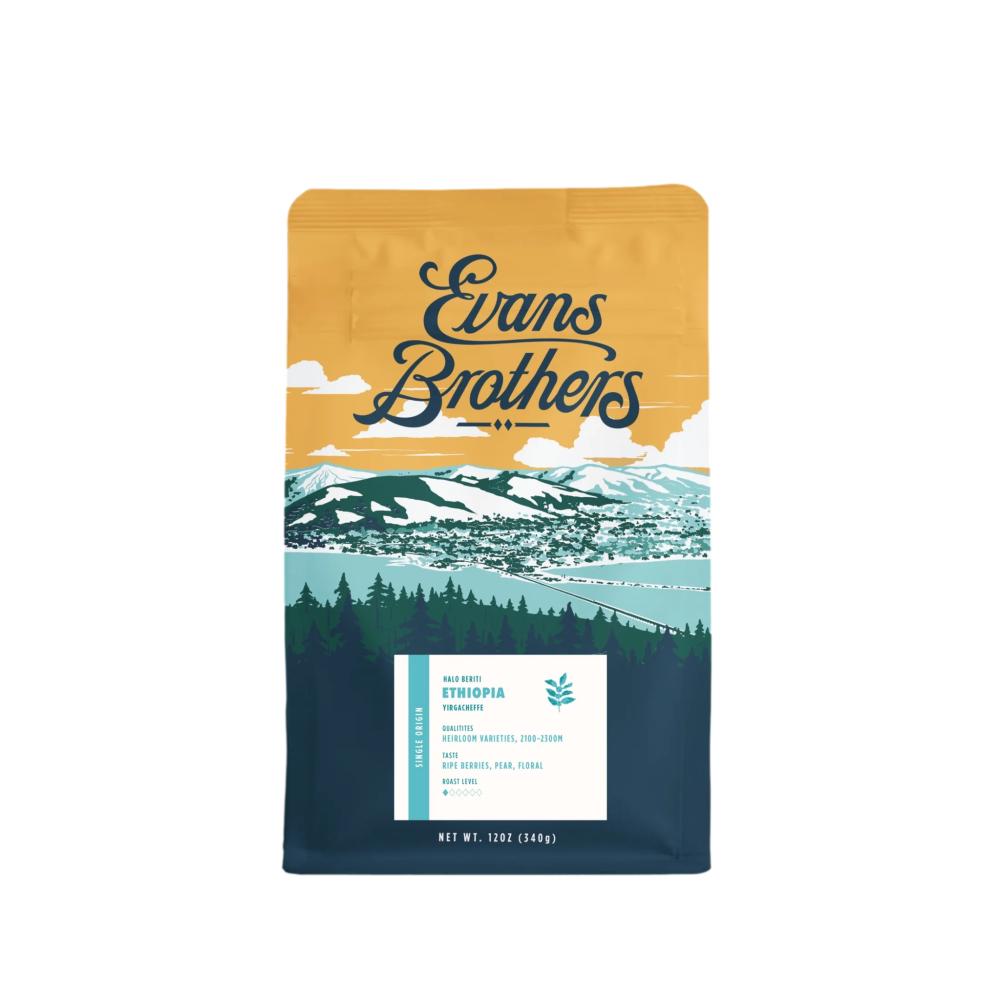
Ethiopia Yirgacheffe Halo Beriti
Ethiopia Yirgacheffe Halo Beriti
Couldn't load pickup availability
Characteristics
Light
Juicy
Bright
Ripe Berries, Pear, Floral
Halo Beriti Washing Station
750 Smallholder Farmers
2,100 - 2,300 MASL
Heirloom Ethiopian Varieties
Washed
Ethiopia
Story
This coffee originates from the Halo Beriti Washing Station in the renowned Yirgacheffe region of Ethiopia. Approximately 750 smallholder farmers deliver their coffee cherries to this station. Notably, this particular batch undergoes a meticulous “special preparation” involving repeated hand sorting during the receiving and drying processes. Moreover, farmers in this region lack access to fertilizers and pesticides, resulting in a unique coffee production method.
Although this coffee cannot be precisely traced to a single variety, it is composed of native heirloom varieties exclusively cultivated in Ethiopia. High-elevation coffees like this one are renowned for their exceptional quality. The cooler temperatures at higher elevations slow down the growth rate, allowing the plant to concentrate on bean production. Consequently, the beans develop more sugars, leading to deeper and more complex flavor profiles.