
Story

This AA separation offers a delightful symphony of flavors, featuring blood orange, tamarind, and white grape, all complemented by a touch of maple sweetness. The finish lingers on the palate with a butterscotch-tinged aftertaste.
Nestled in the Kaira-ini region of Kenya’s Kiambu District, Spike Farm spans an impressive 12 hectares at an elevation of approximately 1,930 meters. Established about a decade ago, the farm cultivates three distinct varieties: SL-28, SL-34, and Ruiru 11. Notably, they’ve recently introduced a separate area where Ruiru 11 is grafted onto SL-28 rootstock. Currently, all cherries are harvested collectively, but the team has plans to implement block-by-block processing next season. This approach will allow them to offer both single variety selections and curated blends.
The coffee-making process at Spike Farm is straightforward yet meticulous. Cherries are first pulped using a compact electric machine, followed by a 72-hour fermentation period to break down the mucilage. After fermentation, the parchment is thoroughly washed and transferred to raised beds for drying, which takes approximately 10 days.
The farm’s name, Moses, was chosen by the owner simply because it appealed to them.
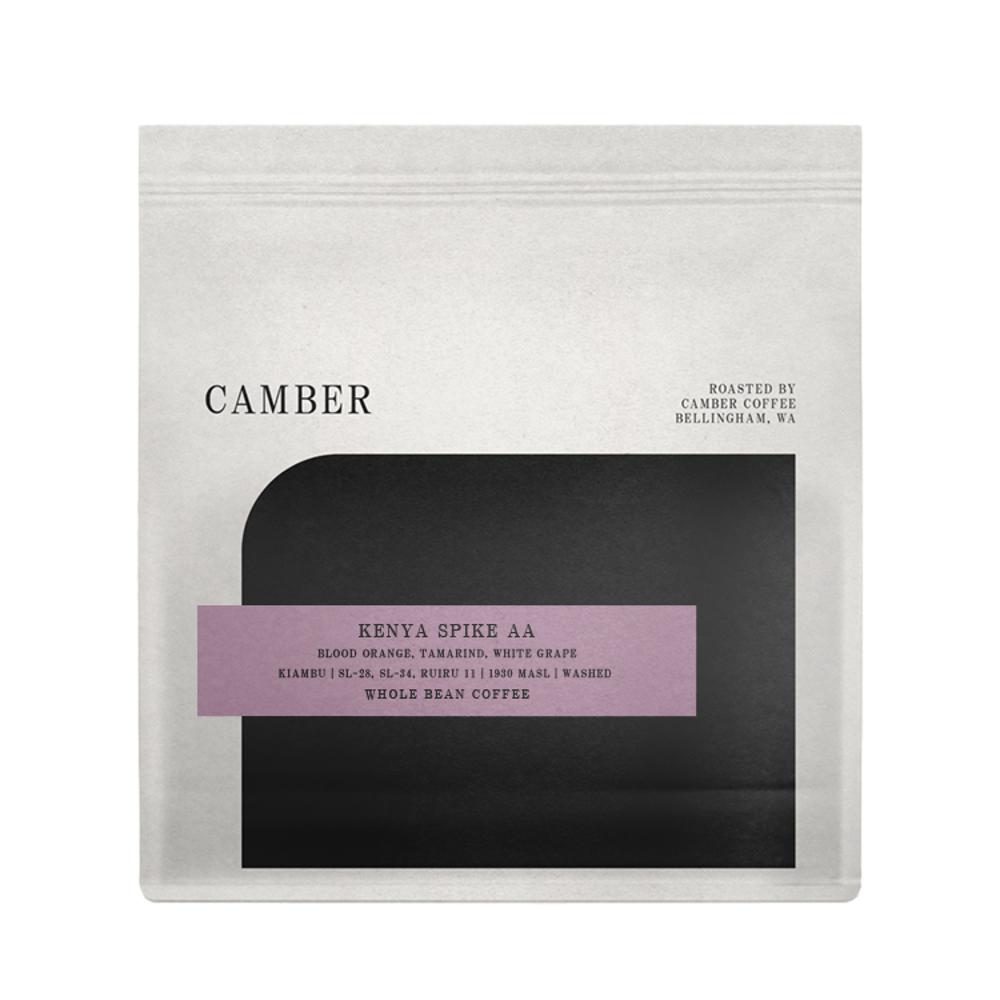
Kenya Spike AA
Kenya Spike AA
Couldn't load pickup availability
Characteristics
Light
Juicy
Tart-Sweet
Blood Orange, Tamarind, White Grape
Spike Farms
Moses
1,930 MASL
SL-28, SL-34, Ruiru 11
Washed
Kiambu
Story
This AA separation offers a delightful symphony of flavors, featuring blood orange, tamarind, and white grape, all complemented by a touch of maple sweetness. The finish lingers on the palate with a butterscotch-tinged aftertaste.
Nestled in the Kaira-ini region of Kenya’s Kiambu District, Spike Farm spans an impressive 12 hectares at an elevation of approximately 1,930 meters. Established about a decade ago, the farm cultivates three distinct varieties: SL-28, SL-34, and Ruiru 11. Notably, they’ve recently introduced a separate area where Ruiru 11 is grafted onto SL-28 rootstock. Currently, all cherries are harvested collectively, but the team has plans to implement block-by-block processing next season. This approach will allow them to offer both single variety selections and curated blends.
The coffee-making process at Spike Farm is straightforward yet meticulous. Cherries are first pulped using a compact electric machine, followed by a 72-hour fermentation period to break down the mucilage. After fermentation, the parchment is thoroughly washed and transferred to raised beds for drying, which takes approximately 10 days.
The farm’s name, Moses, was chosen by the owner simply because it appealed to them.