
Story

Under the leadership of Padre Jose Alejandro Aguilar Posada and farm manager Alejandra Giraldo, Finca Villa Loyola has transitioned from conventional agriculture to organic practices, demonstrating a commitment to sustainability throughout its operations. Resident animals and microorganisms are utilized to enhance compost and soil quality, while rainwater is collected for an advanced irrigation system. Additionally, infrastructure has been constructed using renewable bamboo grown on the farm.
The farm’s new wet mill enables greater control and consistency in coffee processing. It features equipment for pre-classification of coffee cherries, depulping, fermentation, and washing. The wet mill’s roof collects rainwater, which is stored in an underground tank for further use in moving and processing the coffee cherry. During processing, the water is recirculated, and at the end of the process, the wastewater is redirected to a treatment reservoir.
The Carbonic Maceration Process
Originating in the Beaujolais region of France in the 1930s as a wine-making technique, carbonic maceration is a fermentation method that intensifies fruity aromas while minimizing acidity and astringency.
To apply this technique to coffee processing, coffee cherries are rinsed, separated by density, and placed in plastic containers. These containers are then purged using carbon dioxide to expel oxygen and other atmospheric gases. Sealed with lids featuring one-way valves, the containers allow gas to escape during fermentation while preventing any from entering. This CO2-rich environment initiates fermentation intracellularly by the action of enzymes, rather than yeast or other microbes. The cherries are allowed to ferment in this manner for 72 hours before being moved to shade-covered drying beds, where they are naturally dried to produce a natural-process coffee.
Colombia Villa Loyola
Colombia Villa Loyola
Couldn't load pickup availability
Characteristics
Light
Smooth
Sweet-Citrus
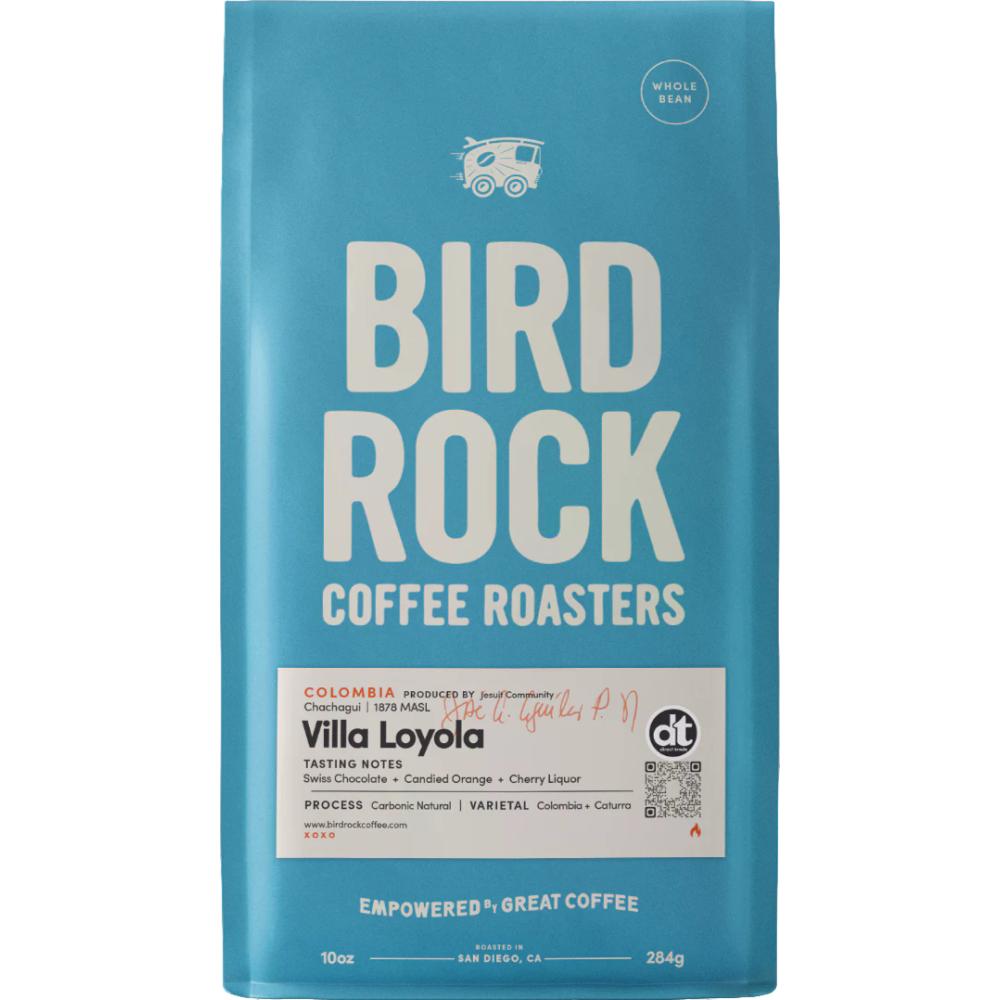
Swiss Chocolate, Candied Orange, Cherry Liquor
Finca Villa Loyola
Jesuit Community
1,878 MASL
Colombia Caturra
Washed
Chachagui Region
Story
Under the leadership of Padre Jose Alejandro Aguilar Posada and farm manager Alejandra Giraldo, Finca Villa Loyola has transitioned from conventional agriculture to organic practices, demonstrating a commitment to sustainability throughout its operations. Resident animals and microorganisms are utilized to enhance compost and soil quality, while rainwater is collected for an advanced irrigation system. Additionally, infrastructure has been constructed using renewable bamboo grown on the farm.
The farm’s new wet mill enables greater control and consistency in coffee processing. It features equipment for pre-classification of coffee cherries, depulping, fermentation, and washing. The wet mill’s roof collects rainwater, which is stored in an underground tank for further use in moving and processing the coffee cherry. During processing, the water is recirculated, and at the end of the process, the wastewater is redirected to a treatment reservoir.
The Carbonic Maceration Process
Originating in the Beaujolais region of France in the 1930s as a wine-making technique, carbonic maceration is a fermentation method that intensifies fruity aromas while minimizing acidity and astringency.
To apply this technique to coffee processing, coffee cherries are rinsed, separated by density, and placed in plastic containers. These containers are then purged using carbon dioxide to expel oxygen and other atmospheric gases. Sealed with lids featuring one-way valves, the containers allow gas to escape during fermentation while preventing any from entering. This CO2-rich environment initiates fermentation intracellularly by the action of enzymes, rather than yeast or other microbes. The cherries are allowed to ferment in this manner for 72 hours before being moved to shade-covered drying beds, where they are naturally dried to produce a natural-process coffee.