Peaberry Recommends
Looking for expert coffee recommendations? Let Professor Peaberry be your guide! Discover handpicked coffee beans, selected for their exceptional flavor, quality, and uniqueness.
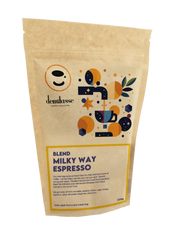
Demitasse Coffee Roasters
Milky Way Espresso
If you asked an astronomer to tell you about the Milky way, they would probably say it is a barred spiral galaxy, about a hundred and fifty thousand light-years across, and that we live in a small part of the galaxy called the Orion Arm. But if you were to ask me, the great Professor Peaberry, the same question, I would say it is a dreamy spiral of dark and heavy chocolate and caramel deliciousness in my cup! Milky way is great as a straight espresso but truly shines in a creamy cloud of steamed milk in my latte cup. This intergalactic espresso blend put Demitasse’s cafes on the map in Southern California. One sip will have you swirling back into sweet childhood type flavors. This is destined to become a GoCoffeeGo favorite and top seller. Try this fantastic new roaster today.
View Details of Milky Way Espresso
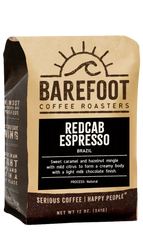
Barefoot Coffee Roasters
Redcab - Espresso
The ever popular Barefoot Redcab Brazil Espresso is a classic mainstay that always hits the mark. For me, it is always on Target! Delightful childlike flavor notes tickle my sweet tooth. Milk Chocolate, Hazelnut and Caramel notes really deliver. Redcab is wonderfully heavy bodied and round with an outstanding crema finish that will make you come back for more. It is an office favorite for many of you, especially when the weather gets chilly. Try this wonderful and comforting snuggly cup of sweet love.
View Details of Redcab - Espresso
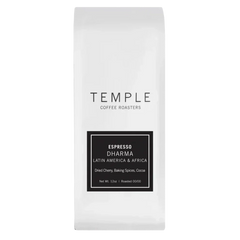
Temple Coffee
Dharma Espresso Blend
Clang your Tibetan singing bowl. Temple's Dharma Espresso will transform you. You may think I am crazy, or jacked up on caffeine but I believe man's understanding of the dharma of inanimate things and the universe will be clearer with each sip. Okay, maybe that is stretching it a bit, but this is a great espresso. It is a perfect mix of Latin America and Ethiopian coffees. As straight espresso, it is a more fruit forward shot, with a bit of lively acidity. I like lively. In cappuccino and milk type drinks, it has a silky creaminess. The flavor brings to mind childhood memories. Flavor flashbacks, like those cups of frozen malted ice cream from the baseball game. You know the ones that you eat with a flat wooden spoon? Or maybe it is more like the soft, milky powdery soft notes, like the ones in Whoppers Malted Milk Ball candy. Great as a shot and comforting with cream. Don't be fooled by the name. Dharma may sound Zen but it is sure to get a lot of excitement.
View Details of Dharma Espresso Blend
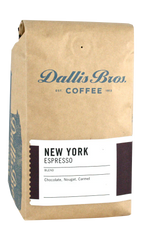
Dallis Bros. Coffee
New York Espresso Blend
Everyone knows that New York does everything big. Dallis Bros. really hit the mark creating a big city espresso that would be worthy of the Big Apple. Yes, it's big and bold, just like the city. It has panache! It is unapologetic and produces crema filled espresso shots that really pack a punch. The sweet and smoky bittersweet chocolate notes are delivered in a heavy body. It is great! One taste of this classic espresso and you are sure to put this on your go-to list in a New York minute!
View Details of New York Espresso Blend
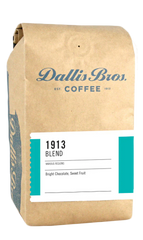
Dallis Bros. Coffee
1913 Blend
Last month, I left my hot air balloon at home and jumped in my Gulfstream and flew to New York City. I headed straight for the Dallis cupping lab in Long Island City to try their latest- greatest coffees. I am thrilled to report I left mesmerized by a new blend called 1913 Blend! Cup after cup, I could not stop drinking it. I started drinking it in the morning and kept at it until lunchtime. It is truly the perfect breakfast and an all-day classic coffee. South American and Central American beans roasted beautifully, produce a bright chocolate cup of yum. It has a wonderful honey-like sweetness with a bit of fruit. Just enough to make it interesting. I loved this coffee so much that they surprised me yesterday with a 5- pound bag in the mail. Joy to the world! This is truly one of the best holiday gifts of all this Christmas. After you try it, you will make this one a Christmas morning and every morning classic.
View Details of 1913 Blend
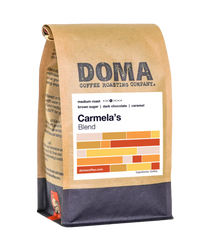
Doma Coffee Roasting Company
Carmela's
Ah yes, not too long ago, I was back on my private jet heading to South America in my never-ending search for the holy grail of coffees. On a secret tip from my faithful valet Baldrick, somewhere in the northern region of South America, Doma Coffee was rumored to have a special secret blend of immense chocolate and tobacco notes befitting royalty. Upon touching down in Bogota, I was greeted at the runway by a mysterious woman with skin as dark and lovely as the roasted beans I was searching for. It was immediately obvious she knew why I had come and had expected me. Once off the plane, I waved farewell to my loyal companion and Go-Go dancer entourage, loading my luggage and favorite French press into her jeep. After an hour of enduring rough terrain plus a rather sore bottom, we arrived at her secluded field. Once parked, we proceeded to hike to the top of the hill where her colleagues were busy sorting, blending and roasting the day’s harvest. We sat down together at a small bistro table beside the roasting shed and locking her eyes to mine, she finally spoke. She said her name is Carmela and she had a coffee that would ensnare my senses. Her hands clapped twice and a young boy of 14 appeared with a wooden tray and two cups of this magical liquid. Scrutinizing the contents I could immediately smell the essence of dark chocolate and tobacco lingering in the air like a siren to a lonely sailor. I lifted the cup to my lips and upon my first sip I felt overtaken by the chocolatey passion, knocking me out of my chair. It was as if my clothes were flying everywhere, like Charlie Brown on the receiving end of a speeding fastball. I quickly regained my senses, however, like a Kennedy, I was bewildered to find my pants missing. Seeing me in a rather vulnerable state, Carmela grinned with cheeky approval. Come hither, Carmela! Having satisfied my scrutiny and recovering my favorite bespoke Kent & Haste trousers, I provided Carmela her payment. Now Doma is sharing Carmela’s blend with true coffee aficionados back home. Suffice to say this decadent roast is, to say the least, Peaberry Approved.
View Details of Carmela's